


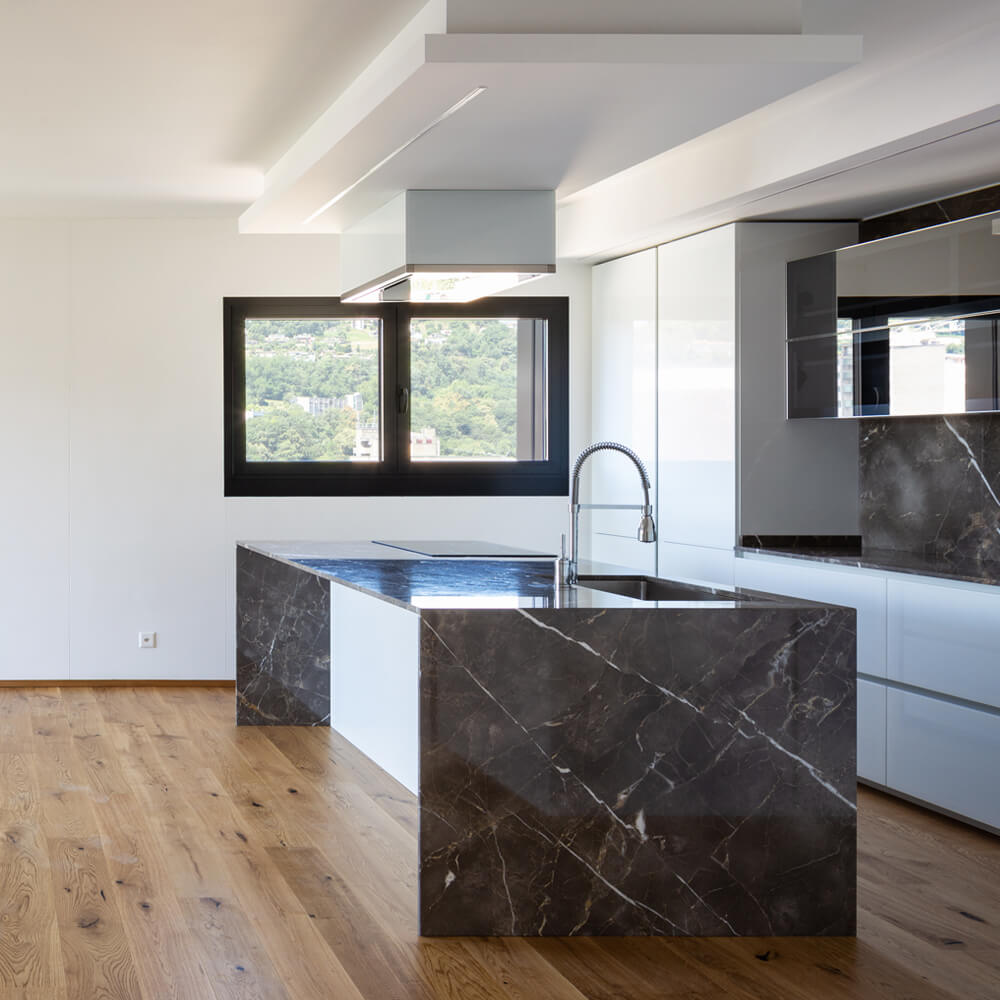




Caring for Your Stone Surfaces
Stone is one of the most durable materials available and will likely outlast every other element of your project. That said, proper care and maintenance will help protect its natural beauty and extend its life.
Routine Care
Clean granite worktops with mild soap, a non-abrasive neutral detergent (pH7), or a cleaner specifically formulated for stone surfaces (see our stone care products for options).
Dry the surface with a chamois leather or similar soft cloth.
Drainer grooves can be cleaned using wire wool.
Important: Never use glass cleaner on marble, travertine, slate, limestone, or onyx.
Staining
Light-coloured granite may temporarily darken if water is left standing; this will fade as it dries.
While granite is highly stain-resistant, oils, grease, and similar products can still leave marks if not wiped up quickly.
Other natural stones—such as marble or limestone—are much more prone to staining, so spills should always be cleaned immediately.
Sealing
All stone is naturally porous to some degree. Granite has low porosity, but to further protect it, a sealer is applied during manufacturing and again upon installation.
To maintain this protection, granite should be resealed every 6–12 months depending on usage.
Marble, limestone, and other softer stones also require resealing—typically once a year.
Acids and Alcohol
Marble and limestone are especially sensitive to acidic and alcoholic substances. Spills from lemon juice, wine, vinegar, beetroot, or similar should be wiped away immediately.
Even residue on the base of wine glasses can leave marks.
Solvent-based products like nail varnish or oils may also stain if not removed quickly.
Never use formic, hydrofluoric, nitric, sulphuric, phosphoric, or hydrochloric acids on granite.
Scratching and Chipping
Granite is highly resistant to scratches and chips under normal use.
While it is safe to cut directly on granite occasionally, using a chopping board is advised to protect your knives.
Avoid dragging heavy or gritty items—such as toolboxes—across the surface, as this may cause scratches.
Heat Resistance
Granite is heat resistant: hot pots and pans from the oven or stove can be placed directly on the surface without burning or marring.
Other natural stones, however, do not share this heat resistance and should be treated with greater care.
Importance of Maintenance
Stones such as marble, travertine, onyx, and limestone are highly porous and require extra attention.
Without proper care, they can stain, scratch, etch, chip, or crack more easily than granite.
Specific Care for Different Stones
Every stone type has unique properties, so some of the above advice will apply only to certain materials. Understanding your specific stone and tailoring care accordingly is the best way to ensure its long-lasting beauty.